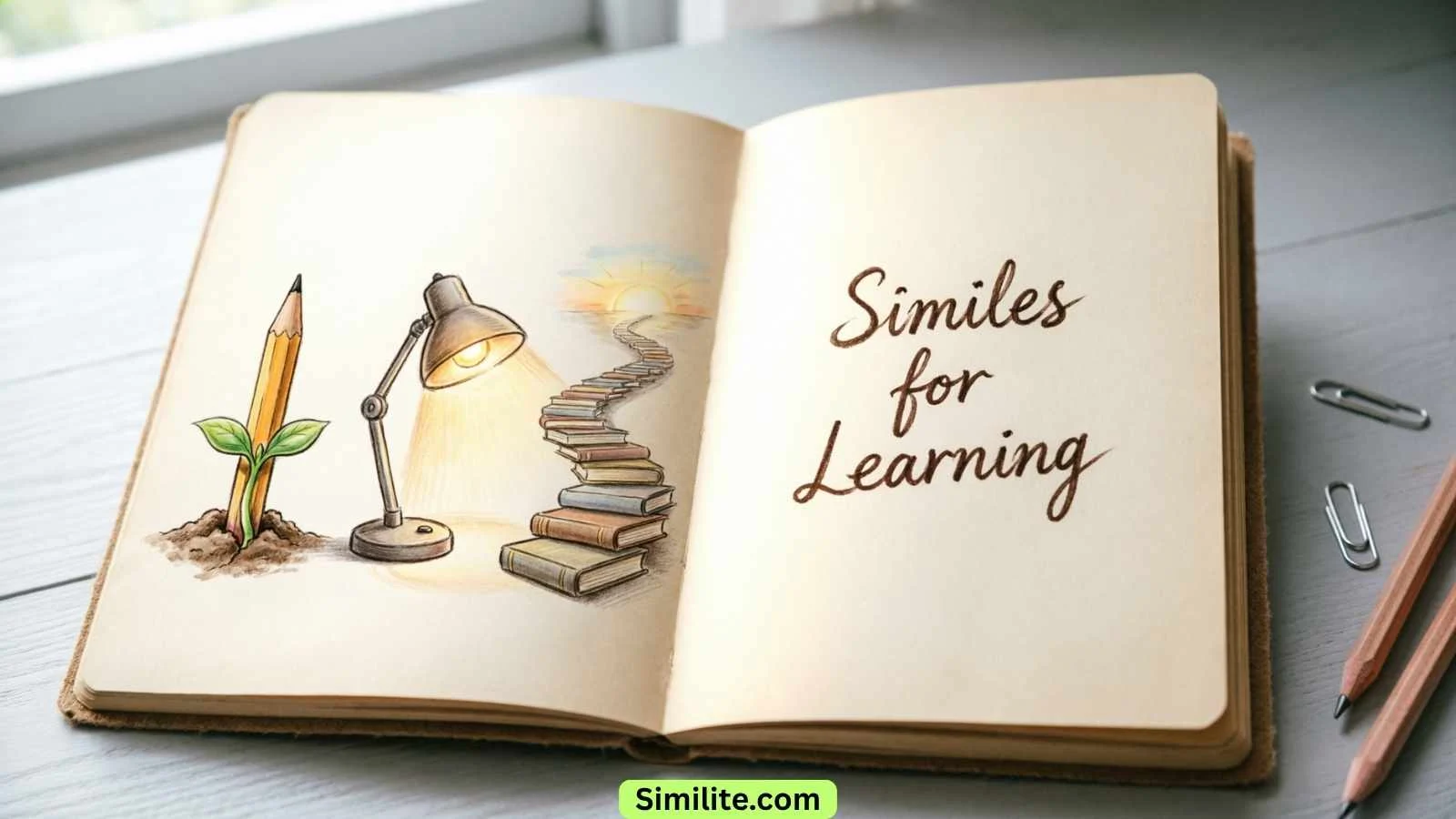
Similes for learning can make your writing more colorful, creative, and easy to understand. A simile is a figure of speech that compares two different things using the words like or as. For example, you might say, Learning is like planting a seed. This helps readers picture an idea more clearly.
In simple terms, similes make writing come alive. They turn ordinary descriptions into memorable images. Writers, students, teachers, and storytellers often use similes to explain ideas in a fun and interesting way.
Learning can sometimes feel exciting, challenging, slow, or rewarding. Similes help express these feelings in a way that readers can easily relate to. They also improve creativity and make writing more engaging.
In this guide, you’ll discover 30 examples of similes, learn their meanings, see practical simile sentences, complete a fun exercise section, and find answers to common questions about the meaning of similes and how to use similes in writing.
Let’s explore these creative and useful similes for learning.
1. Learning is like planting a seed
Meaning:
Learning starts small and grows over time.
Explanation:
Knowledge develops gradually, just like a seed becoming a plant.
Examples:
- Learning a new language is like planting a seed that grows every day.
- Her reading habit is like planting a seed for future success.
2. Learning is as exciting as opening a gift
Meaning:
Learning brings surprise and joy.
Explanation:
New knowledge often feels exciting and rewarding.
Examples:
- Science class was as exciting as opening a gift.
- Discovering a new fact felt as exciting as opening a gift.
3. Learning is like climbing a mountain
Meaning:
Learning requires effort and patience.
Explanation:
Progress may be slow, but reaching goals feels rewarding.
Examples:
- Mastering math is like climbing a mountain.
- Studying for exams felt like climbing a mountain.
4. Learning is as bright as a sunrise
Meaning:
Learning brings understanding and clarity.
Explanation:
Knowledge can light up your mind.
Examples:
- The lesson became as bright as a sunrise after the teacher explained it.
- Her understanding was as bright as a sunrise.
5. Learning is like building a bridge
Meaning:
Learning connects ideas and opportunities.
Explanation:
Knowledge helps people move toward their goals.
Examples:
- Reading is like building a bridge to new worlds.
- Education is like building a bridge to success.
6. Learning is as smooth as a flowing river
Meaning:
Learning can happen naturally.
Explanation:
Ideas may connect easily when you stay curious.
Examples:
- The discussion was as smooth as a flowing river.
- Learning became as smooth as a flowing river with practice.
7. Learning is like solving a puzzle
Meaning:
Learning involves finding answers.
Explanation:
Each new piece of information completes the bigger picture.
Examples:
- History is like solving a puzzle.
- Every lesson felt like solving a puzzle.
8. Learning is as endless as the ocean
Meaning:
There is always more to learn.
Explanation:
Knowledge has no limit.
Examples:
- Human knowledge is as endless as the ocean.
- Learning opportunities are as endless as the ocean.
9. Learning is like lighting a candle
Meaning:
Learning spreads understanding.
Explanation:
Knowledge removes confusion.
Examples:
- Reading books is like lighting a candle.
- Good teaching is like lighting a candle in the mind.
10. Learning is as valuable as gold
Meaning:
Knowledge is precious.
Explanation:
Learning can improve life and create opportunities.
Examples:
- Education is as valuable as gold.
- Good advice is as valuable as gold.
11. Learning is like opening a door
Meaning:
Learning creates new possibilities.
Explanation:
Knowledge helps people discover opportunities.
Examples:
- Reading is like opening a door to adventure.
- Learning skills is like opening a door to success.
12. Learning is as refreshing as cool rain
Meaning:
Learning can energize the mind.
Explanation:
New ideas can feel inspiring.
Examples:
- The workshop was as refreshing as cool rain.
- Learning something useful felt as refreshing as cool rain.
13. Learning is like following a map
Meaning:
Learning guides you toward goals.
Explanation:
Knowledge helps you find the right direction.
Examples:
- Education is like following a map.
- The lesson plan was like following a map.
14. Learning is as powerful as a key
Meaning:
Knowledge unlocks opportunities.
Explanation:
Learning helps solve problems and achieve goals.
Examples:
- Education is as powerful as a key.
- Reading skills are as powerful as a key.
15. Learning is like collecting treasures
Meaning:
Knowledge has lasting value.
Explanation:
Every lesson adds something useful.
Examples:
- Studying is like collecting treasures.
- Every book felt like collecting treasures.
16. Learning is as steady as a ticking clock
Meaning:
Progress happens little by little.
Explanation:
Consistent effort leads to improvement.
Examples:
- Her learning was as steady as a ticking clock.
- Practice made progress as steady as a ticking clock.
17. Learning is like growing a garden
Meaning:
Learning needs care and patience.
Explanation:
Knowledge grows when nurtured.
Examples:
- Education is like growing a garden.
- Reading daily is like growing a garden.
18. Learning is as clear as glass
Meaning:
Understanding is easy and obvious.
Explanation:
Ideas become simple to see.
Examples:
- The explanation was as clear as glass.
- The lesson became as clear as glass.
19. Learning is like a journey through a forest
Meaning:
Learning includes exploration.
Explanation:
You discover new things along the way.
Examples:
- Studying science is like a journey through a forest.
- Learning felt like a journey through a forest.
20. Learning is as strong as an oak tree
Meaning:
Knowledge provides strength.
Explanation:
Education builds confidence and stability.
Examples:
- His knowledge was as strong as an oak tree.
- Good education is as strong as an oak tree.
21. Learning is like filling a toolbox
Meaning:
Learning provides useful skills.
Explanation:
Knowledge helps solve future problems.
Examples:
- School is like filling a toolbox.
- Every lesson is like filling a toolbox.
22. Learning is as colorful as a rainbow
Meaning:
Learning is varied and exciting.
Explanation:
Different subjects bring different experiences.
Examples:
- Education is as colorful as a rainbow.
- The course was as colorful as a rainbow.
23. Learning is like turning pages in a book
Meaning:
Learning moves forward step by step.
Explanation:
Each lesson reveals something new.
Examples:
- Education is like turning pages in a book.
- Every chapter felt like turning pages in a book.
24. Learning is as deep as a well
Meaning:
Knowledge can be profound.
Explanation:
There is always more to discover.
Examples:
- Science is as deep as a well.
- Learning opportunities are as deep as a well.
25. Learning is like polishing a gem
Meaning:
Practice improves ability.
Explanation:
Skills become better with effort.
Examples:
- Writing is like polishing a gem.
- Practice is like polishing a gem.
26. Learning is as quick as a spark
Meaning:
Understanding can happen suddenly.
Explanation:
Some ideas become clear instantly.
Examples:
- The answer came as quick as a spark.
- His understanding was as quick as a spark.
27. Learning is like crossing a bridge
Meaning:
Learning helps you move forward.
Explanation:
Knowledge takes you from one stage to another.
Examples:
- Education is like crossing a bridge.
- Every lesson felt like crossing a bridge.
28. Learning is as rewarding as finding treasure
Meaning:
Learning brings satisfaction.
Explanation:
Knowledge often leads to achievement.
Examples:
- Finishing the course was as rewarding as finding treasure.
- Learning new skills felt as rewarding as finding treasure.
29. Learning is like a ladder to success
Meaning:
Learning helps you achieve goals.
Explanation:
Each step brings progress.
Examples:
- Education is like a ladder to success.
- Reading books is like a ladder to success.
30. Learning is as limitless as the sky
Meaning:
There are endless possibilities for learning.
Explanation:
Knowledge can continue growing throughout life.
Examples:
- Human curiosity is as limitless as the sky.
- Learning opportunities are as limitless as the sky.
Practical Exercise
Questions
Identify the Simile
- Learning is like growing a garden.
- Knowledge is as valuable as gold.
- Education opened many opportunities.
Complete the Simile
- Learning is like planting a ______.
- Knowledge is as limitless as the ______.
- Learning is as colorful as a ______.
Match the Meaning
- Like climbing a mountain → ______
- Like opening a door → ______
- Like filling a toolbox → ______
- Like lighting a candle → ______
Options:
A. Provides useful skills
B. Creates opportunities
C. Requires effort and patience
D. Brings understanding
Answers and Explanations
- Simile — Uses the word like.
- Simile — Uses the word as.
- Not a simile — No comparison using like or as.
- Seed — Learning grows over time.
- Sky — Learning has no limits.
- Rainbow — Learning can be exciting and varied.
- C — Requires effort and patience.
- B — Creates opportunities.
- A — Provides useful skills.
- D — Brings understanding.
FAQ About Similes for Learning
What is the meaning of similes?
The meaning of similes is to compare two different things using the words like or as. This comparison helps readers understand ideas more clearly.
What are some examples of similes?
Some examples of similes include:
- Learning is like planting a seed.
- Knowledge is as valuable as gold.
- Learning is as limitless as the sky.
These are common examples of similes used in writing.
How do similes improve writing?
Similes make writing more vivid and engaging. They help readers picture ideas and emotions more easily.
How can students use similes in writing?
Students can compare ideas, people, places, or experiences using like or as. This makes essays, stories, and descriptions more interesting.
What are creative writing similes?
Creative writing similes are imaginative comparisons that add detail and emotion. They help readers visualize what the writer is describing.
How do I create my own similes?
Think of the thing you want to describe. Then compare it to something familiar using like or as. Choose a comparison that clearly shows the quality you want to highlight.
What is the difference between a simile and a metaphor?
A simile uses like or as to compare things. A metaphor makes a direct comparison without using those words.
Why are simile sentences important?
Simile sentences make ideas easier to understand. They also make writing more memorable and enjoyable to read.
Conclusion
Similes are a simple but powerful way to make writing more creative and engaging. They help readers see ideas through clear and relatable comparisons. The examples of similes in this guide show how learning can be described in fun and meaningful ways.
Understanding the meaning of similes and practicing how to use similes in writing can improve stories, essays, and everyday communication. Keep experimenting with your own comparisons and try adding similes to your writing whenever possible.
The more you practice, the easier it becomes to create vivid descriptions that capture attention and bring your ideas to life.