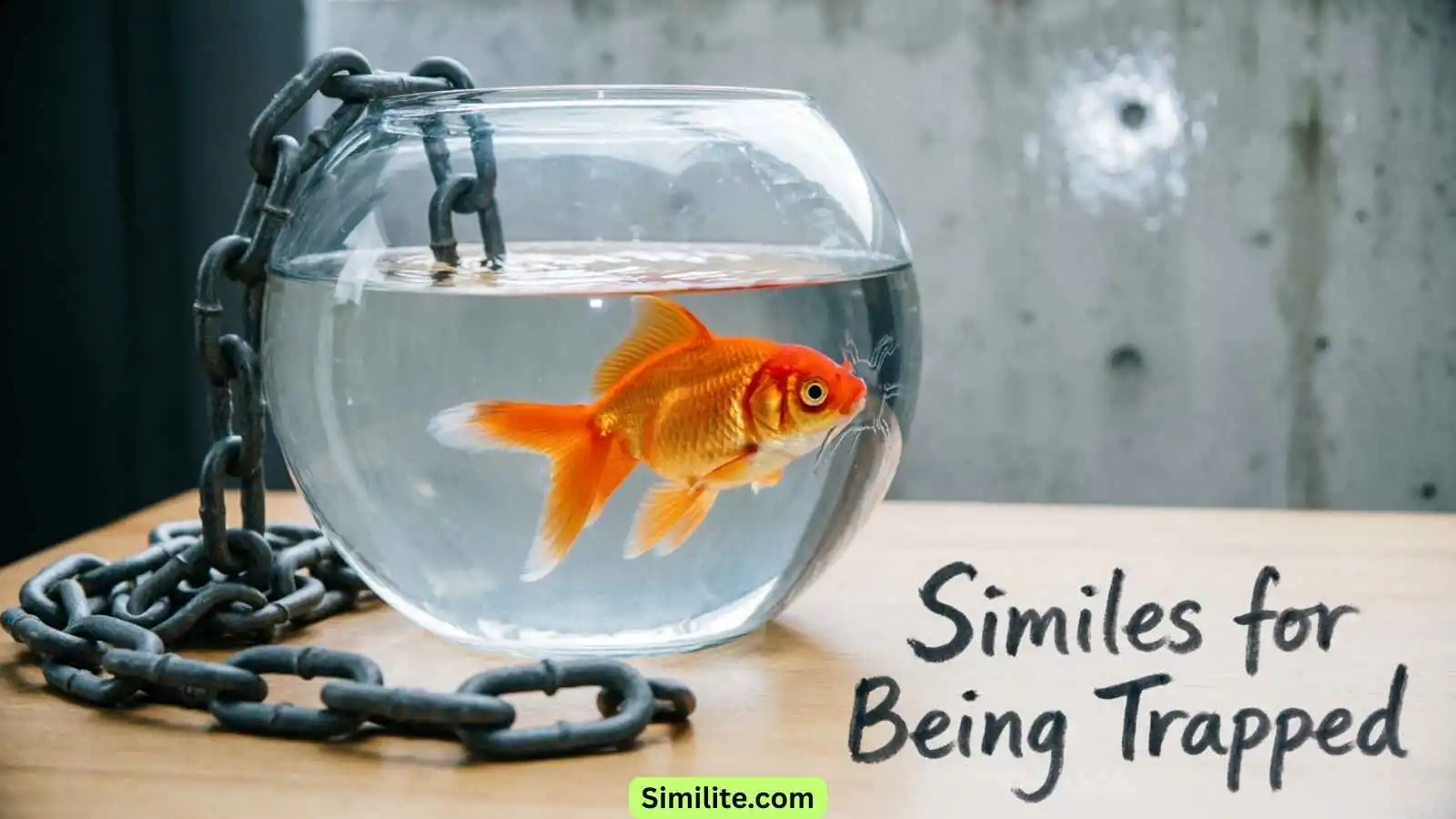
Similes for being trapped help writers describe feelings of being stuck, confined, helpless, or unable to escape. A simile compares one thing to another using the words “like” or “as.” These comparisons make writing more colorful and easier to understand.
For example, instead of saying “I felt trapped,” you might say, “I felt like a bird in a cage.” This creates a stronger picture in the reader’s mind.
Learning the meaning of similes can improve your writing skills. They help readers connect with emotions and situations more easily. Whether you are writing a story, poem, essay, or journal entry, similes can make your words more vivid and memorable.
In this guide, you’ll discover 30 examples of similes, their meanings, explanations, and real-life usage. You’ll also learn how to use similes in writing, practice with fun exercises, and get answers to common questions about creative writing similes.
Let’s explore these powerful similes together.
Similes Section:
1. Like a bird in a cage
Meaning: Feeling unable to leave or be free.
Explanation: This simile shows a strong desire for freedom while being confined.
Examples:
- After weeks indoors, I felt like a bird in a cage.
- She looked like a bird in a cage during the long meeting.
2. Like a fish in a net
Meaning: Unable to escape from a difficult situation.
Explanation: Fish caught in nets have little chance of getting away.
Examples:
- The thief was like a fish in a net once the police arrived.
- I felt like a fish in a net during the argument.
3. Like a mouse in a trap
Meaning: Stuck with no easy way out.
Explanation: It suggests fear and helplessness.
Examples:
- He felt like a mouse in a trap after making the mistake.
- I was like a mouse in a trap facing so many deadlines.
4. Like a prisoner behind bars
Meaning: Restricted and unable to act freely.
Explanation: It emphasizes confinement and control.
Examples:
- During the lockdown, many felt like prisoners behind bars.
- She sat at home like a prisoner behind bars.
5. Like a fly in a spider’s web
Meaning: Caught in a dangerous situation.
Explanation: Escape seems almost impossible.
Examples:
- He was like a fly in a spider’s web after signing the unfair contract.
- I felt like a fly in a spider’s web at that moment.
6. Like a ship stuck in ice
Meaning: Unable to move forward.
Explanation: Progress has completely stopped.
Examples:
- My career felt like a ship stuck in ice.
- The project moved like a ship stuck in ice.
7. Like a rabbit caught in a fence
Meaning: Trapped unexpectedly.
Explanation: It shows surprise and panic.
Examples:
- He looked like a rabbit caught in a fence.
- I felt like a rabbit caught in a fence during the interview.
8. Like a bug under a glass
Meaning: Unable to escape observation or control.
Explanation: Someone feels watched and restricted.
Examples:
- I felt like a bug under a glass at school.
- The employee worked like a bug under a glass.
9. Like a deer caught in headlights
Meaning: Frozen and unable to react.
Explanation: Fear causes a person to become stuck.
Examples:
- She stood like a deer caught in headlights.
- I felt like a deer caught in headlights when questioned.
10. Like a knot that won’t untie
Meaning: Stuck in a complicated problem.
Explanation: The situation seems impossible to solve.
Examples:
- My finances felt like a knot that wouldn’t untie.
- The issue remained like a knot that wouldn’t untie.
11. Like a train stuck on the tracks
Meaning: Unable to continue moving.
Explanation: Progress is blocked.
Examples:
- My plans were like a train stuck on the tracks.
- The company felt like a train stuck on the tracks.
12. Like a leaf trapped in a storm drain
Meaning: Carried into a place with no escape.
Explanation: It suggests helplessness.
Examples:
- I felt like a leaf trapped in a storm drain.
- He drifted through life like a leaf trapped in a storm drain.
13. Like a lion in a cage
Meaning: Powerful but restricted.
Explanation: Someone wants freedom but cannot act.
Examples:
- The athlete felt like a lion in a cage while injured.
- I paced like a lion in a cage.
14. Like a toy in a box
Meaning: Limited and confined.
Explanation: Freedom is taken away.
Examples:
- The child felt like a toy in a box.
- I was like a toy in a box during recovery.
15. Like a boat tied to a dock
Meaning: Unable to go where you want.
Explanation: Potential exists, but movement is restricted.
Examples:
- My dreams felt like a boat tied to a dock.
- He stood like a boat tied to a dock.
16. Like a bird with clipped wings
Meaning: Unable to achieve freedom.
Explanation: Opportunities have been taken away.
Examples:
- She felt like a bird with clipped wings.
- I moved through life like a bird with clipped wings.
17. Like a key locked inside a box
Meaning: Unable to fulfill a purpose.
Explanation: Potential is trapped.
Examples:
- I felt like a key locked inside a box.
- His talent was like a key locked inside a box.
18. Like a shadow trapped in a room
Meaning: Unable to leave a place or situation.
Explanation: It suggests isolation.
Examples:
- She felt like a shadow trapped in a room.
- I wandered like a shadow trapped in a room.
19. Like a ball stuck in mud
Meaning: Unable to move freely.
Explanation: Every effort feels difficult.
Examples:
- My progress was like a ball stuck in mud.
- He felt like a ball stuck in mud.
20. Like a wheel spinning in sand
Meaning: Working hard without getting anywhere.
Explanation: Effort produces little result.
Examples:
- The project was like a wheel spinning in sand.
- I felt like a wheel spinning in sand.
21. Like a bird trapped in a chimney
Meaning: Stuck in a narrow and stressful place.
Explanation: Escape feels difficult.
Examples:
- He looked like a bird trapped in a chimney.
- I felt like a bird trapped in a chimney.
22. Like a seed buried under stone
Meaning: Growth is blocked.
Explanation: Potential cannot develop.
Examples:
- My creativity felt like a seed buried under stone.
- She was like a seed buried under stone.
23. Like a swimmer caught in seaweed
Meaning: Struggling to break free.
Explanation: Obstacles hold someone back.
Examples:
- I felt like a swimmer caught in seaweed.
- He moved like a swimmer caught in seaweed.
24. Like a fox in a snare
Meaning: Caught unexpectedly.
Explanation: The situation feels dangerous.
Examples:
- He was like a fox in a snare.
- I felt like a fox in a snare after the news.
25. Like a butterfly pinned to a board
Meaning: Unable to move or escape.
Explanation: Complete restriction is shown.
Examples:
- She felt like a butterfly pinned to a board.
- I stood like a butterfly pinned to a board.
26. Like a book locked in a chest
Meaning: Hidden and unable to be shared.
Explanation: Ideas or feelings remain trapped.
Examples:
- My thoughts felt like a book locked in a chest.
- He was like a book locked in a chest.
27. Like a candle under a jar
Meaning: Restricted from shining fully.
Explanation: Talents cannot be expressed.
Examples:
- She felt like a candle under a jar.
- I lived like a candle under a jar.
28. Like a path blocked by a wall
Meaning: Facing a barrier.
Explanation: Progress suddenly stops.
Examples:
- My plans felt like a path blocked by a wall.
- He stood before the challenge like a path blocked by a wall.
29. Like a bird tangled in string
Meaning: Restricted by problems.
Explanation: Freedom exists but cannot be reached.
Examples:
- I felt like a bird tangled in string.
- She struggled like a bird tangled in string.
30. Like a star hidden by clouds
Meaning: Potential is blocked or concealed.
Explanation: Something valuable cannot shine.
Examples:
- His talent was like a star hidden by clouds.
- I felt like a star hidden by clouds.
Practical Exercise
Questions
Identify the Simile
- I felt like a lion in a cage all day.
- Her dreams were like a boat tied to a dock.
- He stood like a deer caught in headlights.
Complete the Simile
- Like a bird in a ______.
- Like a fish in a ______.
- Like a ball stuck in ______.
Match the Meaning
- Bird with clipped wings → ?
- Wheel spinning in sand → ?
- Fox in a snare → ?
- Star hidden by clouds → ?
Options:
A. Potential hidden
B. Caught unexpectedly
C. Working without progress
D. Unable to achieve freedom
Answers
- Lion in a cage
- Boat tied to a dock
- Deer caught in headlights
- Cage
- Net
- Mud
- D
- C
- B
- A
Short Explanations
- Questions 1–3 ask you to identify simile sentences.
- Questions 4–6 test your memory of common similes.
- Questions 7–10 help connect similes with their meanings.
FAQs About Similes for Being Trapped
What is the meaning of similes?
The meaning of similes is to compare two different things using “like” or “as.” This helps create clear images and emotions in writing.
What are some examples of similes for being trapped?
Examples of similes include “like a bird in a cage,” “like a fish in a net,” and “like a mouse in a trap.”
How do similes improve creative writing?
Creative writing similes make descriptions more vivid. They help readers see, feel, and understand situations more clearly.
How can I use similes in writing?
When learning how to use similes in writing, compare a feeling or situation to something familiar using “like” or “as.”
Why are simile sentences useful?
Simile sentences add detail and emotion. They make stories, essays, and poems more engaging for readers.
Can similes express emotions?
Yes. Similes can describe emotions such as fear, sadness, happiness, excitement, and feeling trapped.
What is the difference between a simile and a metaphor?
A simile uses “like” or “as.” A metaphor makes a direct comparison without those words.
Should students learn similes?
Yes. Similes are one of the easiest and most useful figurative language tools for students and writers.
Conclusion
Similes for being trapped help writers describe difficult emotions in a vivid and memorable way. Instead of simply saying someone feels stuck, you can create a stronger image with comparisons such as a bird in a cage or a fish in a net.
These examples of similes make writing more engaging and easier to understand. By learning the meaning of similes and practicing how to use similes in writing, you can improve your storytelling, essays, poems, and everyday communication.
Keep exploring new comparisons, practice writing your own simile sentences, and use these creative writing similes to bring your ideas to life.