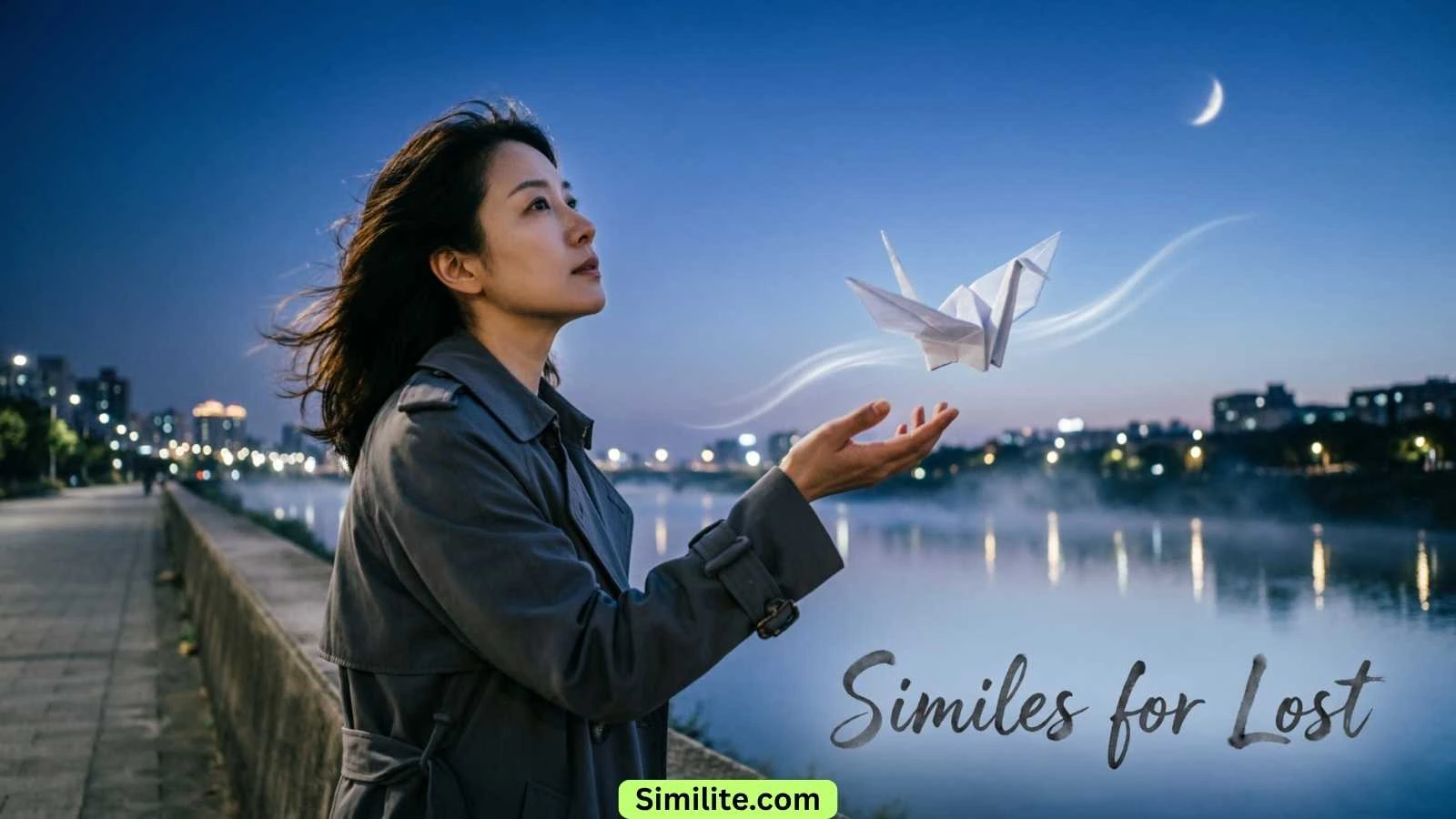
Similes for lost help writers describe feelings of confusion, loneliness, uncertainty, or being unable to find a direction. A simile is a figure of speech that compares two different things using words like “as” or “like.” Similes make writing more colorful and easier to imagine.
For example, instead of saying someone was confused, you might say they were “like a traveler without a map.” This creates a clear picture in the reader’s mind.
Learning similes is a great way to improve your writing skills. They help readers connect with emotions and situations more deeply. Whether you are writing stories, poems, essays, or creative assignments, similes can make your words more powerful.
In this guide, you’ll discover 30 examples of similes, their meanings, explanations, and real-life examples. You’ll also learn how to use similes in writing, practice with fun exercises, and get answers to common questions about similes.
Let’s explore these creative writing similes together.
30 Similes for Lost
1. Lost like a traveler without a map
Meaning: Very confused about where to go.
Explanation: It describes someone who has no clear direction.
Examples:
- After changing schools, I felt lost like a traveler without a map.
- He looked lost like a traveler without a map in the huge mall.
2. Lost like a ship without a compass
Meaning: Unsure about what to do next.
Explanation: It shows a lack of guidance.
Examples:
- Without her advice, I felt lost like a ship without a compass.
- The team seemed lost like a ship without a compass.
3. Lost like a leaf in the wind
Meaning: Moving without control or purpose.
Explanation: It suggests uncertainty and helplessness.
Examples:
- I felt lost like a leaf in the wind after graduation.
- The child wandered around lost like a leaf in the wind.
4. Lost like a bird in a storm
Meaning: Struggling in a difficult situation.
Explanation: It highlights fear and confusion.
Examples:
- She felt lost like a bird in a storm during the interview.
- He looked lost like a bird in a storm.
5. Lost like a needle in a haystack
Meaning: Extremely difficult to find.
Explanation: Often used for missing people or objects.
Examples:
- My keys were lost like a needle in a haystack.
- The document was lost like a needle in a haystack.
6. Lost like a child in a crowd
Meaning: Feeling alone and confused.
Explanation: It creates a picture of uncertainty.
Examples:
- I felt lost like a child in a crowd on my first day.
- She looked lost like a child in a crowd.
7. Lost like a star in daylight
Meaning: Hidden or unnoticed.
Explanation: Something exists but is hard to see.
Examples:
- His talent was lost like a star in daylight.
- The message was lost like a star in daylight.
8. Lost like an echo in the mountains
Meaning: Disappearing without effect.
Explanation: Suggests being forgotten.
Examples:
- My words were lost like an echo in the mountains.
- Her warning was lost like an echo in the mountains.
9. Lost like a fish out of water
Meaning: Uncomfortable in a new place.
Explanation: Describes someone who doesn’t belong.
Examples:
- I felt lost like a fish out of water at the party.
- He was lost like a fish out of water in the city.
10. Lost like a shadow at noon
Meaning: Gone completely.
Explanation: Refers to something difficult to notice.
Examples:
- My confidence vanished, lost like a shadow at noon.
- The clue was lost like a shadow at noon.
11. Lost like a wanderer in the desert
Meaning: Without direction or hope.
Explanation: Shows deep confusion.
Examples:
- He felt lost like a wanderer in the desert.
- I was lost like a wanderer in the desert after moving away.
12. Lost like smoke in the sky
Meaning: Gone without a trace.
Explanation: Suggests disappearance.
Examples:
- The opportunity was lost like smoke in the sky.
- Their plans were lost like smoke in the sky.
13. Lost like a puzzle missing pieces
Meaning: Incomplete or confused.
Explanation: Something important is missing.
Examples:
- Without my friends, I felt lost like a puzzle missing pieces.
- The story seemed lost like a puzzle missing pieces.
14. Lost like a boat in rough seas
Meaning: Facing uncertainty.
Explanation: Shows struggle and confusion.
Examples:
- She felt lost like a boat in rough seas.
- The company seemed lost like a boat in rough seas.
15. Lost like a path covered by snow
Meaning: Hard to follow or understand.
Explanation: Direction is hidden.
Examples:
- My goals felt lost like a path covered by snow.
- The solution was lost like a path covered by snow.
16. Lost like a dream after waking
Meaning: Quickly forgotten.
Explanation: Something fades away.
Examples:
- The memory was lost like a dream after waking.
- His idea was lost like a dream after waking.
17. Lost like a drop in the ocean
Meaning: Small and unnoticed.
Explanation: Shows insignificance.
Examples:
- I felt lost like a drop in the ocean.
- One voice seemed lost like a drop in the ocean.
18. Lost like a stranger in a new town
Meaning: Unfamiliar and confused.
Explanation: Describes discomfort in new situations.
Examples:
- I felt lost like a stranger in a new town.
- She looked lost like a stranger in a new town.
19. Lost like a page torn from a book
Meaning: Separated from where it belongs.
Explanation: Suggests disconnection.
Examples:
- He felt lost like a page torn from a book.
- The note was lost like a page torn from a book.
20. Lost like footprints in the rain
Meaning: Erased completely.
Explanation: Something disappears over time.
Examples:
- Their tracks were lost like footprints in the rain.
- The memory faded, lost like footprints in the rain.
21. Lost like a kite without a string
Meaning: Without guidance or control.
Explanation: Shows lack of support.
Examples:
- I felt lost like a kite without a string.
- He looked lost like a kite without a string.
22. Lost like a candle in the wind
Meaning: Weak and uncertain.
Explanation: Something vulnerable.
Examples:
- Her confidence was lost like a candle in the wind.
- Hope felt lost like a candle in the wind.
23. Lost like a road with no signs
Meaning: Lacking direction.
Explanation: Difficult to know where to go.
Examples:
- My future felt lost like a road with no signs.
- The project was lost like a road with no signs.
24. Lost like a voice in a crowded room
Meaning: Ignored or unheard.
Explanation: Someone is not being noticed.
Examples:
- My opinion felt lost like a voice in a crowded room.
- His request was lost like a voice in a crowded room.
25. Lost like a cloud in the night sky
Meaning: Hard to notice.
Explanation: Hidden among many things.
Examples:
- The detail was lost like a cloud in the night sky.
- She felt lost like a cloud in the night sky.
26. Lost like a traveler in a maze
Meaning: Completely confused.
Explanation: Unable to find the right path.
Examples:
- I felt lost like a traveler in a maze.
- He looked lost like a traveler in a maze.
27. Lost like a message never delivered
Meaning: Not reaching its destination.
Explanation: Something important fails to connect.
Examples:
- My words were lost like a message never delivered.
- The warning was lost like a message never delivered.
28. Lost like sand in the desert
Meaning: Impossible to locate.
Explanation: Blends into everything around it.
Examples:
- The ring was lost like sand in the desert.
- The clue was lost like sand in the desert.
29. Lost like a note in a symphony
Meaning: Overlooked among many others.
Explanation: Something becomes hard to notice.
Examples:
- My idea was lost like a note in a symphony.
- Her voice was lost like a note in a symphony.
30. Lost like a lantern without light
Meaning: Without purpose or direction.
Explanation: Something cannot perform its role.
Examples:
- He felt lost like a lantern without light.
- I was lost like a lantern without light after the change.
Practical Exercise
Questions
Identify the Simile
- She felt lost like a child in a crowd.
- He was like a fish out of water at the meeting.
- My keys were lost like a needle in a haystack.
Complete the Simile
- Lost like a traveler without a ________.
- Lost like a ship without a ________.
- Lost like footprints in the ________.
Match the Meaning
- Fish out of water → ?
- Ship without a compass → ?
- Voice in a crowded room → ?
- Leaf in the wind → ?
Options:
- A. Unheard
- B. Uncomfortable
- C. No direction
- D. No control
Answers and Explanations
1.
Answer: Yes, it is a simile.
Explanation: It uses “like” to make a comparison.
2.
Answer: Yes, it is a simile.
Explanation: It compares a person to a fish out of water.
3.
Answer: Yes, it is a simile.
Explanation: It compares missing keys to something very difficult to find.
4.
Answer: Map
Explanation: A map helps provide direction.
5.
Answer: Compass
Explanation: A compass guides a ship.
6.
Answer: Rain
Explanation: Rain washes footprints away.
7.
Answer: B. Uncomfortable
Explanation: A fish out of water does not belong there.
8.
Answer: C. No direction
Explanation: A compass provides guidance.
9.
Answer: A. Unheard
Explanation: Voices can be ignored in crowds.
10.
Answer: D. No control
Explanation: A leaf moves wherever the wind takes it.
Frequently Asked Questions
What is the meaning of similes?
The meaning of similes is to compare two different things using words such as “like” or “as.” This comparison helps readers understand ideas more clearly.
What are some examples of similes?
Examples of similes include “lost like a ship without a compass,” “busy as a bee,” and “quiet as a mouse.” These comparisons create vivid images.
How do you use similes in writing?
When learning how to use similes in writing, compare a feeling, action, or object to something familiar. This makes descriptions more interesting and easier to imagine.
Why are similes important in creative writing?
Creative writing similes help writers paint pictures with words. They make stories, poems, and essays more engaging and expressive.
What is the difference between a simile and a metaphor?
A simile uses words like “like” or “as.” A metaphor directly says one thing is another thing without using comparison words.
Can students use similes in school assignments?
Yes. Similes improve descriptions and make writing more creative. Teachers often encourage students to use them.
How can I create my own similes?
Think about the feeling or object you want to describe. Then compare it to something readers know well. Make sure the comparison is easy to understand.
Conclusion
Similes are powerful tools that make writing more colorful and expressive. These similes for lost can help you describe confusion, loneliness, uncertainty, and feeling out of place in creative ways.
By studying the examples of similes in this guide, you can improve your vocabulary and strengthen your writing skills. The best way to learn how to use similes in writing is through regular practice.
Try creating your own simile sentences and using them in stories, essays, or daily writing. The more you practice, the more natural and creative your writing will become.