Similes for problems can make your writing more interesting, colorful, and easy to understand. A simile is a figure of speech that compares one thing to another using the words like or as. Instead of simply saying a problem is difficult, you can compare it to something familiar to help readers picture it more clearly.
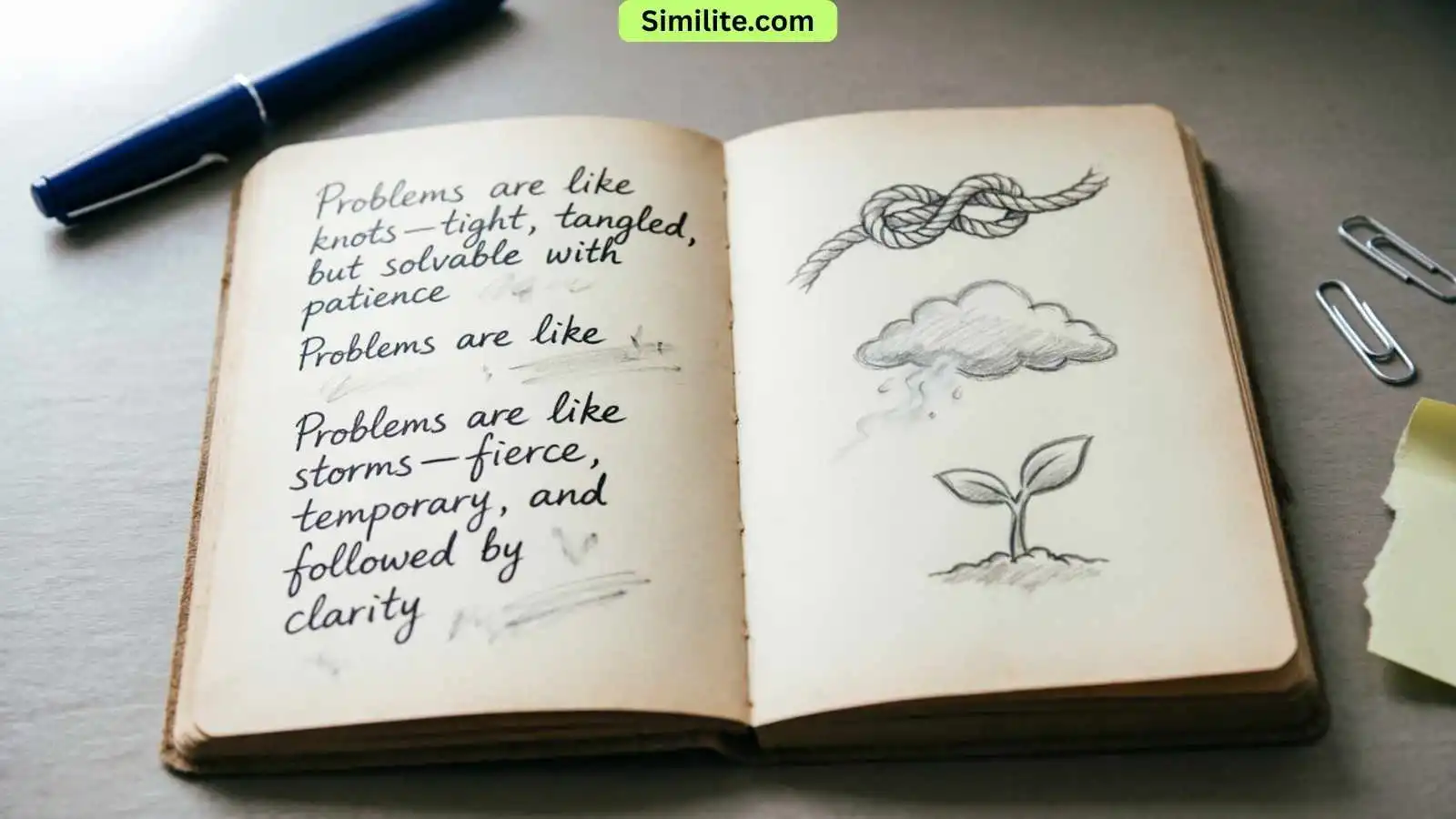
For example, saying a problem is like a knot that won’t untangle creates a stronger image than simply calling it complicated.
Writers, students, and storytellers often use similes to express feelings, challenges, and situations in a creative way. They help readers connect with your ideas and understand emotions more deeply.
In this guide, you’ll learn the meaning of similes, explore 30 examples of similes about problems, see practical simile sentences, and discover how to use similes in writing. You’ll also find a fun exercise section and answers to common questions.
Let’s explore these creative writing similes together.
1. Like a knot that won’t untangle
Meaning:
A very complicated problem.
Explanation:
The issue seems difficult to solve because everything is mixed together.
Examples:
- My homework felt like a knot that won’t untangle.
- The company’s finances were like a knot that won’t untangle.
2. Like a mountain standing in the way
Meaning:
A huge obstacle.
Explanation:
The problem appears big and difficult to overcome.
Examples:
- The deadline stood like a mountain in the way.
- His fears were like a mountain standing in the way of success.
3. Like a storm cloud overhead
Meaning:
A problem causing worry.
Explanation:
It creates stress and uncertainty.
Examples:
- Debt hung over him like a storm cloud overhead.
- The argument stayed like a storm cloud overhead all week.
4. Like walking through quicksand
Meaning:
Making little progress.
Explanation:
The harder you try, the harder it seems.
Examples:
- Solving the puzzle felt like walking through quicksand.
- The project moved like walking through quicksand.
5. Like a puzzle with missing pieces
Meaning:
Incomplete information.
Explanation:
Important details are missing.
Examples:
- The mystery was like a puzzle with missing pieces.
- Understanding the report felt like a puzzle with missing pieces.
6. Like a thorn in your side
Meaning:
A constant annoyance.
Explanation:
The problem keeps bothering you.
Examples:
- The broken printer was like a thorn in my side.
- Traffic became like a thorn in her side.
7. Like carrying a heavy backpack
Meaning:
A burden.
Explanation:
The problem weighs you down emotionally or mentally.
Examples:
- Stress felt like carrying a heavy backpack.
- The responsibility was like carrying a heavy backpack.
8. Like a maze with no exit
Meaning:
A confusing situation.
Explanation:
You cannot find a solution easily.
Examples:
- The paperwork was like a maze with no exit.
- The rules seemed like a maze with no exit.
9. Like a ticking clock
Meaning:
Time-sensitive problem.
Explanation:
Urgency keeps increasing.
Examples:
- The assignment was like a ticking clock.
- The repair issue became like a ticking clock.
10. Like a fire spreading in dry grass
Meaning:
A growing problem.
Explanation:
The issue becomes worse very quickly.
Examples:
- Rumors spread like a fire in dry grass.
- The mistake grew like a fire spreading in dry grass.
11. Like a brick wall
Meaning:
A complete blockage.
Explanation:
Progress suddenly stops.
Examples:
- I hit a problem like a brick wall.
- Their negotiations ended like a brick wall.
12. Like a tangled fishing net
Meaning:
A messy situation.
Explanation:
Many issues are connected together.
Examples:
- The legal case was like a tangled fishing net.
- The schedule looked like a tangled fishing net.
13. Like a leak in a boat
Meaning:
A small issue becoming serious.
Explanation:
Ignoring it can create bigger problems.
Examples:
- The bug was like a leak in a boat.
- The misunderstanding was like a leak in a boat.
14. Like a shadow that follows you
Meaning:
A recurring problem.
Explanation:
It never seems to go away.
Examples:
- Anxiety followed him like a shadow.
- The issue remained like a shadow that follows you.
15. Like a locked door
Meaning:
A blocked opportunity.
Explanation:
Something prevents progress.
Examples:
- The lack of money was like a locked door.
- Fear became like a locked door.
16. Like a giant boulder
Meaning:
An overwhelming challenge.
Explanation:
The problem feels very heavy.
Examples:
- The decision felt like a giant boulder.
- The workload was like a giant boulder.
17. Like a spider web
Meaning:
A complex problem.
Explanation:
Everything is connected.
Examples:
- The situation was like a spider web.
- The investigation became like a spider web.
18. Like a sinking ship
Meaning:
A failing situation.
Explanation:
Things are getting worse quickly.
Examples:
- The business looked like a sinking ship.
- Their plan became like a sinking ship.
19. Like a road full of potholes
Meaning:
Many difficulties.
Explanation:
Challenges appear constantly.
Examples:
- The journey was like a road full of potholes.
- Starting the company felt like a road full of potholes.
20. Like a chain around your ankles
Meaning:
Something holding you back.
Explanation:
Progress is slowed or stopped.
Examples:
- Fear was like a chain around his ankles.
- Debt felt like a chain around her ankles.
21. Like a dark tunnel
Meaning:
A difficult period.
Explanation:
The end is hard to see.
Examples:
- The crisis felt like a dark tunnel.
- Job hunting seemed like a dark tunnel.
22. Like a broken compass
Meaning:
Lack of direction.
Explanation:
You do not know what to do.
Examples:
- The team was like a broken compass.
- I felt like a broken compass during the project.
23. Like balancing on a tightrope
Meaning:
A risky situation.
Explanation:
One mistake can cause trouble.
Examples:
- Managing both jobs was like balancing on a tightrope.
- The negotiations were like balancing on a tightrope.
24. Like a flood breaking a dam
Meaning:
An overwhelming problem.
Explanation:
Issues arrive all at once.
Examples:
- Complaints came like a flood breaking a dam.
- The challenges arrived like a flood breaking a dam.
25. Like a stubborn stain
Meaning:
A problem that refuses to disappear.
Explanation:
It remains despite efforts to remove it.
Examples:
- The error was like a stubborn stain.
- The conflict stayed like a stubborn stain.
26. Like a fog covering the road
Meaning:
Uncertainty.
Explanation:
The future is unclear.
Examples:
- The decision felt like a fog covering the road.
- The market situation was like a fog covering the road.
27. Like a ball of yarn
Meaning:
A tangled issue.
Explanation:
The problem has many parts.
Examples:
- The story became like a ball of yarn.
- The dispute was like a ball of yarn.
28. Like climbing a steep hill
Meaning:
A difficult task.
Explanation:
Success requires effort.
Examples:
- Learning the skill was like climbing a steep hill.
- Recovery felt like climbing a steep hill.
29. Like a stormy sea
Meaning:
A chaotic situation.
Explanation:
Things are unpredictable.
Examples:
- The market was like a stormy sea.
- Life felt like a stormy sea that month.
30. Like a riddle with no answer
Meaning:
A problem that seems impossible.
Explanation:
No clear solution appears.
Examples:
- The mystery felt like a riddle with no answer.
- The challenge seemed like a riddle with no answer.
Practical Exercise
Questions
1. Identify the simile:
The project was like a mountain standing in the way.
2. Identify the simile:
Her stress followed her like a shadow.
3. Complete the simile:
The challenge was like a _______ wall.
4. Complete the simile:
The situation felt like a dark _______.
5. Complete the simile:
The problem grew like a fire spreading in dry _______.
6. Match the meaning:
Like a locked door
A. Uncertainty
B. Blocked opportunity
C. Recurring problem
7. Match the meaning:
Like a stormy sea
A. Chaos
B. Burden
C. Direction
8. Which simile means “confusing situation”?
9. Which simile means “constant annoyance”?
10. Which simile means “time-sensitive problem”?
Answers and Explanations
1. Like a mountain standing in the way
It compares a challenge to a mountain.
2. Like a shadow
It shows a recurring problem.
3. Brick
Like a brick wall means progress stops.
4. Tunnel
Like a dark tunnel means a difficult period.
5. Grass
The problem spreads quickly.
6. B — Blocked opportunity
The problem prevents progress.
7. A — Chaos
The situation is unpredictable.
8. Like a maze with no exit
It represents confusion.
9. Like a thorn in your side
It means ongoing irritation.
10. Like a ticking clock
It highlights urgency.
FAQ About Similes for Problems
What is the meaning of similes?
A simile is a comparison between two different things using words such as like or as. The meaning of similes is to help readers imagine ideas more clearly.
What are some examples of similes for problems?
Examples of similes include like a mountain standing in the way, like a thorn in your side, and like a puzzle with missing pieces.
How do you use similes in writing?
When learning how to use similes in writing, compare a situation to something familiar. This helps readers understand emotions, challenges, and experiences more easily.
Why are similes important in creative writing?
Creative writing similes make descriptions more vivid and memorable. They help readers picture what is happening and connect emotionally with the story.
Can students use similes in essays?
Yes. Similes can improve essays, stories, and school assignments by making writing more engaging and descriptive.
What is the difference between a simile and a metaphor?
A simile uses words like like or as. A metaphor directly states that one thing is another thing without using comparison words.
How can I create my own simile?
Think about the problem you want to describe. Then compare it to something familiar. For example, a confusing problem might be like a maze with no exit.
Do similes improve writing skills?
Yes. Similes improve vocabulary, creativity, and expression. They make simile sentences more interesting and easier to understand.
Conclusion
Learning similes for problems is a great way to make your writing stronger and more creative. Similes help readers see challenges, emotions, and situations through clear and memorable comparisons.
If you are writing a story, essay, blog post, or school assignment, these examples of similes can bring your ideas to life. The best way to improve is through practice. Try creating your own comparisons based on everyday experiences.
The more you use creative writing similes, the easier it becomes to express ideas in a vivid and engaging way. Keep experimenting, keep writing, and let your imagination guide you.